
How often are porta potties cleaned?
The Z4.3 industry standard sets one cleaning per week as the floor for light use, roughly 10 people over a standard 40 hour week. Once you go past that, the math changes fast. A construction site running 25 workers needs service two or three times a week just to keep tanks from filling early, and OSHA 1926.51(c) sets the toilet ratio that drives how many units you need in the first place: one seat for every 20 workers up to 20, then one seat and one urinal per 40 workers beyond that. Peoria Porta Pros treats the weekly visit as a starting point, then adjusts once we see actual usage on site. Event rentals near downtown Peoria often get serviced the morning of and again if the event runs multiple days. If you are still working out headcount, the how many porta potties do I need guide walks through it before you book.
What does a cleaning visit actually include?
A real service visit pumps the tank, which holds 60 to 70 gallons on a standard unit, then rinses, treats with deodorizer, and restocks paper. It is not a wipe-down. The tech checks the door latch, sprays the interior, and tops off hand sanitizer if the unit has a dispenser. For units at construction dumpster sites or agricultural properties, techs also confirm nothing besides toilet paper went down the tank, since solids and debris shorten the interval between pumps. If you are asking how much does it cost to clean a porta potty as a one-off versus a standing contract, the service fee columns matter more than the unit rental itself, and a clean porta potty rental contract almost always beats paying per visit. A single extra cleaning during a busy week runs inside the service fee band, while multi-week contracts spread that cost across the monthly porta potty rental rate. Compare full pricing on the porta potty rental cost page before you set a schedule.
| service type | duration | low | typical | high |
|---|---|---|---|---|
| service_fee | day | 100 | 175 | 300 |
| service_fee | week | 30 | 60 | 220 |
| service_fee | month | 100 | 150 | 300 |
| service_fee | weekend | 400 | 700 | 1200 |
Why does cleaning frequency change by season or site type?
Heat is the biggest driver in Peoria. Higher temperatures speed up odor and bacteria growth in the tank, so summer rentals often move from weekly to twice-weekly even at low headcount. Long events like weddings or festivals need service scheduled around the actual event day, not just a calendar slot; see the event restroom rental or wedding restroom rental pages for how that timing works. Farm and agricultural sites fall under OSHA 1928.110, which requires one facility per 20 hand-labor employees, reachable within a quarter mile walk, and that ratio plus fieldwork intensity often pushes cleaning to a tighter schedule than a typical office jobsite. Grease trap and septic work runs on a different clock entirely. A grease interceptor gets pumped once fats, oils, grease and solids reach 25 percent of the liquid depth, and a residential septic tank is typically pumped every 3 to 5 years depending on tank size and household size. Neither follows the weekly porta potty rhythm, which is why septic pumping service and grease trap pumping get scheduled separately from restroom units.
Do self-cleaning or deluxe units need less service?
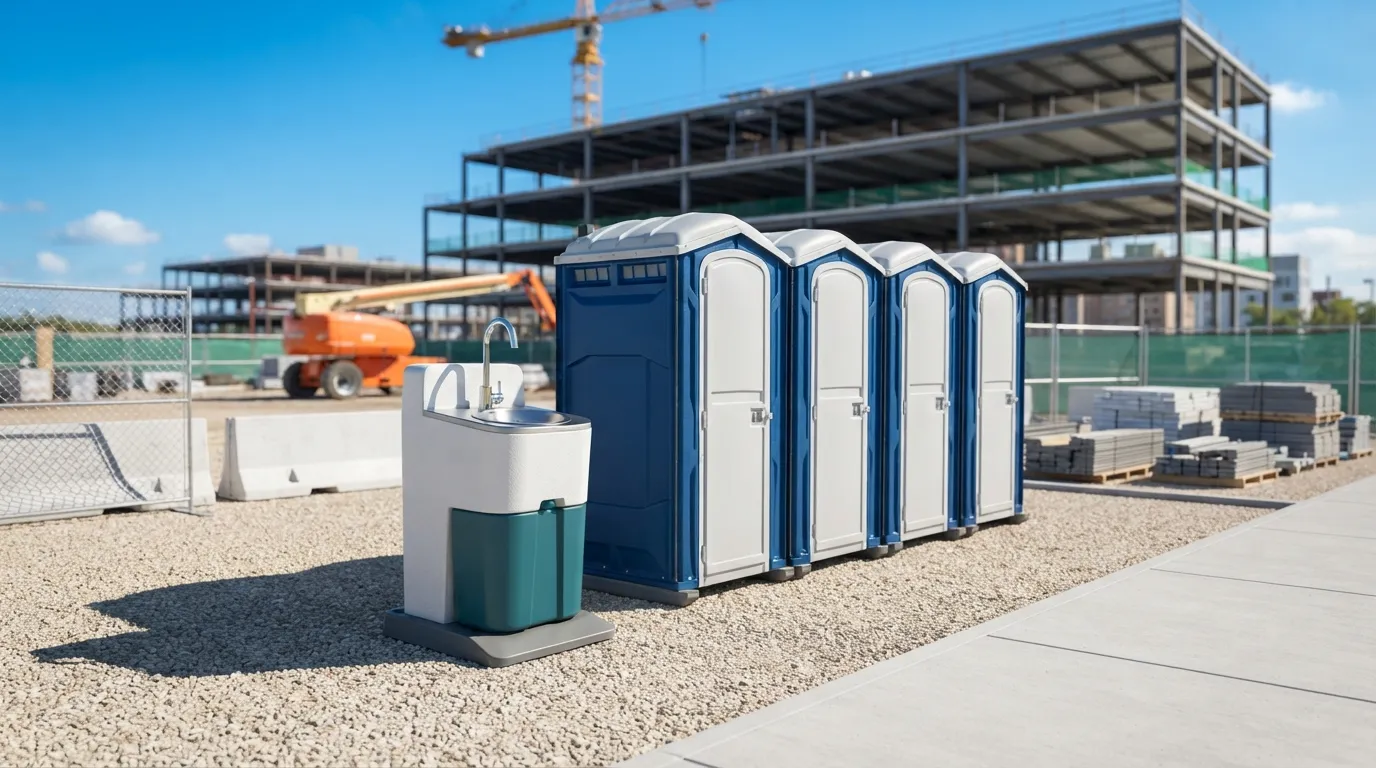
Deluxe flushable units still need the same pump-and-restock visit as a standard unit; "self-cleaning" describes the flush mechanism inside the unit, not the tank service interval. A deluxe flushable porta potty uses water to rinse the bowl between uses, which cuts down on visible buildup, but the holding tank still fills and still needs a technician on the same weekly or twice-weekly cycle as any other unit. ADA units follow the same rule. Under ADA Standards 213.2, at least 5 percent of a cluster of single-user units must be accessible, and those accessible units get serviced on the identical schedule as the rest of the fleet, not a special track. Washing facilities tied to painting, coating, or pesticide work fall under OSHA 1926.51(f)(1) and need their own attention beyond toilet service. If your search was for portable toilet cleaning jobs near me or a portable toilet cleaner jobs near me listing, know that our route techs are employees, not contractors, and the same crew that cleans your unit can service handwashing stations set up at the same site; see handwashing station rental for setup details. Some customers ask about a self-cleaning porta potty rental, but that term describes the flush mechanism, not a unit that skips the weekly tank service.
Can I request extra cleanings mid-rental?
Yes. Call ahead and we will add a visit, usually inside the day-rate service fee band for a single extra stop. This is common during multi-day festivals, race weekends, or any emergency porta potty rental situation where usage spikes past what was planned.
Does a higher headcount mean more frequent cleaning?
Yes, directly. OSHA 1926.51(c) ties unit count to worker count, and more users means faster tank fill regardless of unit count. A 30-person crew on one unit needs daily service; spread across three units per the OSHA portable toilet requirements guide, weekly may hold.
Is a portable toilet cleaner rental different from a standard rental?
No, cleaning is bundled into the rental price, not sold separately as a standalone product. What varies is frequency and duration, covered on the porta potty rental per day and monthly porta potty rental pages.
What happens if a unit isn't cleaned on schedule?
Tanks overflow, odor builds, and paper runs out fast. Report it immediately; Peoria Porta Pros dispatches a same-day fix in most cases, similar to how we handle emergency septic service calls.
Do winter rentals in Peoria need less frequent cleaning?
Sometimes, since cooler weather slows odor buildup, but usage doesn't disappear. Check porta potty in winter for how seasonal scheduling actually works across a rental period.
Next step
Get a delivery date
Tell us the address, the dates and the headcount. We size the order and confirm the route.